Waffles
Classic Belgian waffle
Brussels waffle
Liège waffle
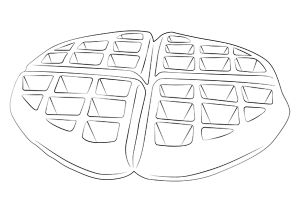
American waffle
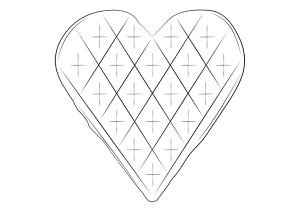
Heart-shaped waffle / International waffle
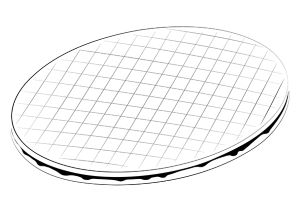
Stroopwafel / Syrup waffle
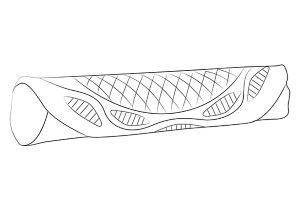
New Year’s waffle / Ice cream cake
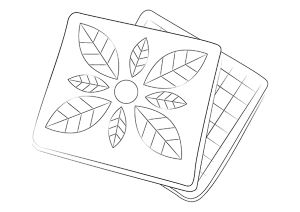
Cinnamon waffle
Belgian waffles
Belgian waffles are usually rectangular or square. The waffle pattern of rectangles or squares is formed by four-sided truncated pyramids standing on top of one another with a narrow gap between them.
In addition to the shape of the waffle iron, Belgian waffles are divided into 1. Brussels waffles and 2. Liège waffles. Brussels waffles are soft and are baked from a batter, such as the ‘Traditional Original Recipe’ by Caspar Cloer. Liège waffles are baked from a heavy, kneaded yeast dough with coarse sugar. Typically, Liège waffles do not completely fill the mould of the waffle iron but are baked into an irregular shape. The waffle irons used are the same. Brussels waffles
were allegedly invented in 1856 by Maximilian Consael, though not in Brussels, but in Ghent. However, the first patent (No. 94,045) for a (non-electric) waffle iron was filed in the USA by Cornelius Swartwout (New York) on 24 August 1869. This waffle iron was remarkably similar to the Belgian waffle, although it was round rather than square like the original, which had not obtained patent protection. This round form of the Belgian waffle is therefore also known as the American waffle.
As the American waffle iron cannot deny its origins, all varieties of the Belgian waffle celebrate their annual holiday on 24 August, ‘National Waffle Day’.
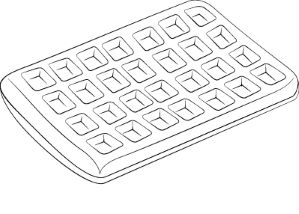
Classic Belgian waffle
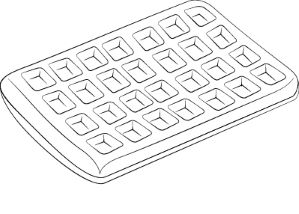
The original form of the Belgian waffle has a pattern of 4 x 7 rectangles or squares formed by truncated pyramids. This results in varying thicknesses, right down to the crispy, thoroughly baked surfaces of the indentations. Smaller waffles with 4 x 5 squares are also common.
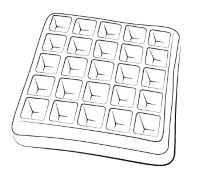
Brussels-style Belgian waffle / European waffle
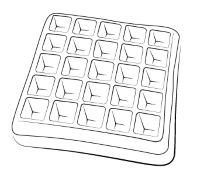
Very similar to the classic Belgian waffle, but square in shape and often significantly thicker. A typical pattern consists of 5 x 5 truncated pyramids.
Liège waffle
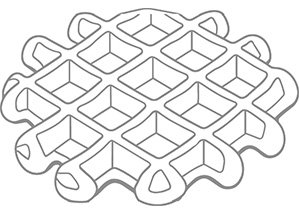
The Belgian waffle from the city of Liège differs significantly from other Belgian waffles due to its batter. Liège waffles are not made from a batter, but from a kneaded yeast dough. A typical feature of genuine Liège waffles is the coarse sugar, which gives them their distinctive flavour.
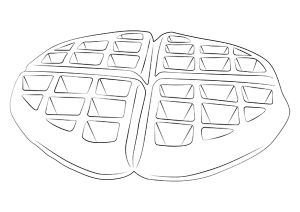
American waffle
The American waffle is actually also a Belgian waffle. It is round and, in most models, can be divided into four sections. However, the profile and pyramids are the same as those of other Belgian waffles. Round Belgian waffles are called American waffles because Cornelius Swartwout of New York applied for patent No 94,045 for a non-electric waffle iron on 24 August 1869.
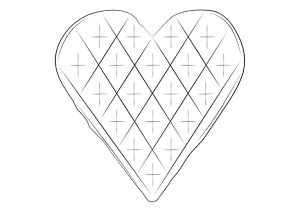
Heart-shaped waffle / International waffle
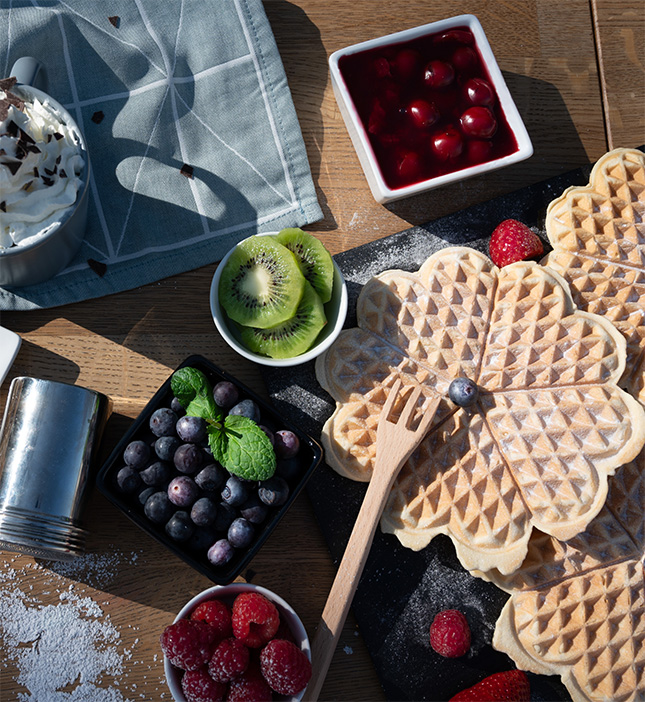
The international heart-shaped waffle is a soft waffle, best eaten fresh. This sweet waffle is baked from a batter, such as the “Traditional Original Recipe” by Caspar Cloer. The most common waffle irons are those that can be divided into five heart-shaped pieces. However, there are also moulds consisting of six slightly more pointed hearts. There are also waffle irons that bake just one large heart or five individual hearts. Due to the “International Waffle Day”, which originated in Sweden, the heart-shaped waffle is also known as the “International Waffle”. This is celebrated annually on 25 March.
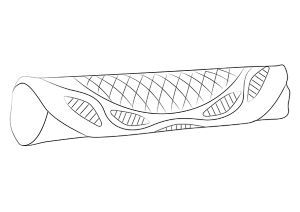
New Year’s waffle
The New Year’s waffle is a very thin, crisp waffle that is often rolled into a cylinder or shaped like an ice-cream cone. The waffle keeps well for several weeks. Traditionally, it is baked and eaten in the run-up to Christmas and “between the years” to mark the approaching New Year celebrations.
A special variety of the New Year’s waffle is the East Frisian New Year’s cake, on which the waffle bears the East Frisian coat of arms.
Holiday: 1 January
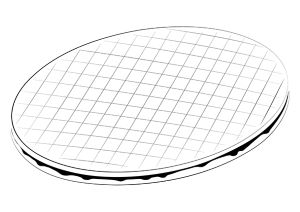
Stroopwafel / Syrup waffle
The New Year’s waffle is a very thin, hard waffle that is often rolled into a cylinder or shaped like an ice-cream cone. The waffle keeps well for several weeks. Traditionally, it is baked and eaten in the run-up to Christmas and ‘between the years’ to mark the approaching New Year celebrations. A special variety of the New Year’s waffle is the East Frisian New Year’s cake, on which the waffle bears the East Frisian coat of arms.
Holiday: 1 January
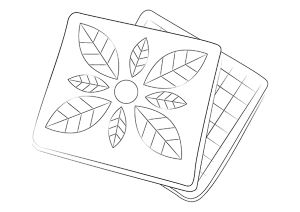
Cinnamon waffle
Traditionally baked during the run-up to Christmas, the cinnamon waffle is mainly made in the Saarland and the Palatinate. The Saarland waffle differs from other waffles due to its biscuit-like, crispy texture. Its appearance is also quite distinctive: its square, compact shape is embossed with various motifs (such as a cross, a snail or a cloverleaf).